

Savage Dalliance: The Manchester Mystic Who Brought Trance Back From the Brink
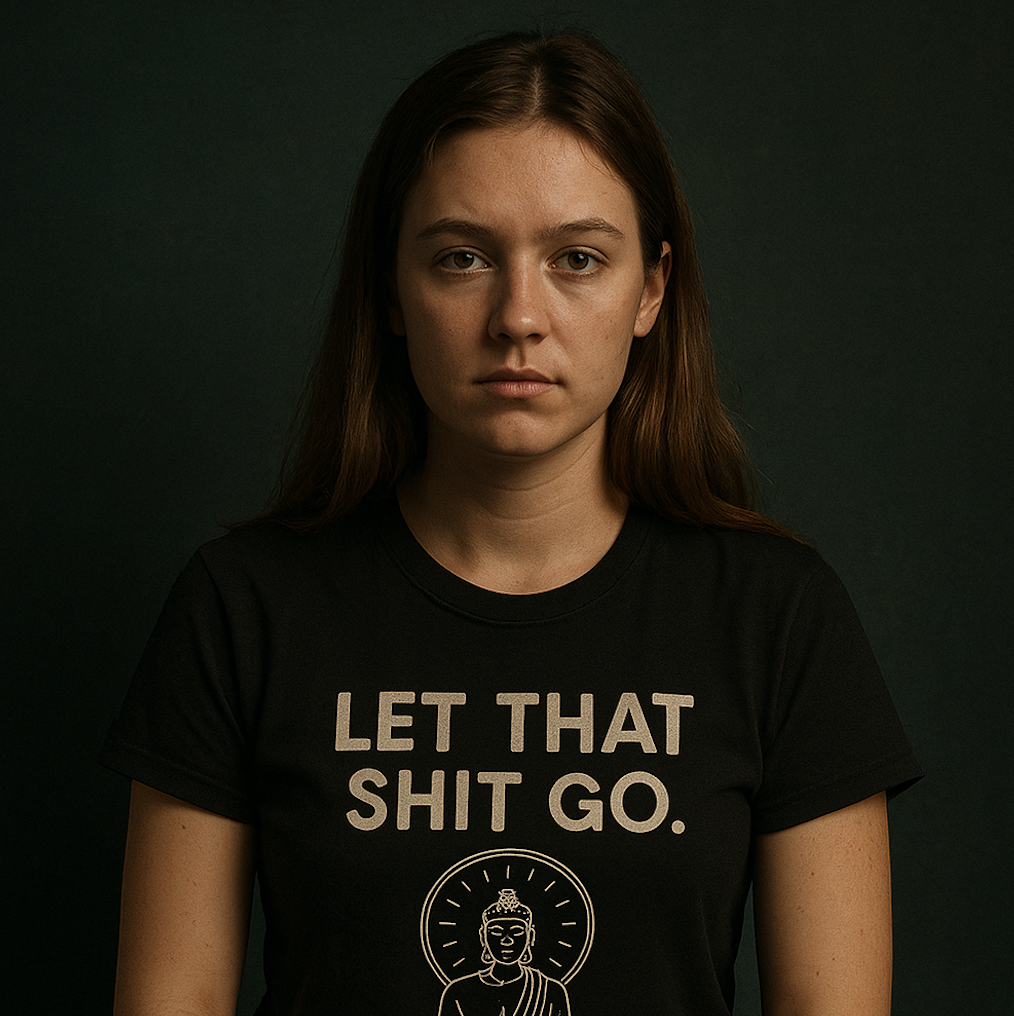
“It’s not yoga, it’s breathing and stretching and trying to stop my brain chewing its own leg off.”
For all the sunsets, influencers, and sachets of powdered disappointment that clog Ibiza’s arteries every summer, there are still a few artists who keep the island weird. Savage Dalliance is one of them, and she seems faintly irritated by the fact. She moved here a decade ago, chasing the usual house gigs, the all-nighters, the off-season hustle. It was supposed to be temporary. Nothing lasts longer than something that was supposed to be temporary.
Her new single, White Island Mysteries, starts with a breath. Not a simulated one. Her own. Then the synths fold in like saltwater tightening around your ankles. It is trance, technically, though the genre classification feels irrelevant once the track opens up into its slow spiral of bells, pads, and low-frequency murmurs. The hook is a delayed vocal that sounds like a dream trying to remember you. The whole thing is a swirling essay on the impact of yoga on her life, although Savage herself hates that description.
“It’s not yoga,” she says, lighting another cigarette with the dying stub of the last one. “It’s breathing and stretching and trying to stop my brain chewing its own leg off.” She punctuates this with a laugh that is equal parts exhaustion and threat. Behind her, on the terrace of a hillside bar in Santa Agnès, the bass from someone else’s party throbs like a distant engine. She barely notices. Noise is her natural habitat.
Savage is from Manchester and has never fully forgiven the world for not being Manchester. She grew up on cold club floors and breakbeats that rattled the fillings out of your teeth. The Ibiza transition happened by accident. She was ghost-producing for a pair of Euro-house twins when one of them passed out an hour before a sunrise set. She stepped in. She played harder, faster, stranger than anyone expected. People still talk about that morning as if it was religious. Savage remains sceptical. “They were off their heads,” she says. “If you play anything on a beach at dawn it sounds profound.”
Her current setup is a study in contradictions. She spends most nights surrounded by bodies, dancers, smoke machines, and that unkillable Balearic optimism. But the work happens in a wooden cabin she built behind her villa in the northern hills. It smells faintly of pine, solder, and cheap tobacco. The cabin houses an immaculate studio anchored by a modular rig that looks like the inside of a telecommunications bunker. “People say modular is for nerds,” she says. “But half the trance scene is just presets wearing sunglasses. I’d rather patch my own chaos.”
The gear list is a mess of custom oscillators, a rare 90s Dutch delay unit that refuses to die, and a field recorder she uses to capture anything from cicadas to nightclub toilets. “Sound is everywhere,” she says. “Most people just don’t want to go near the interesting bits.”
She gestures vaguely at the cabin. “That place is where I can hear myself think. Which is rare. And dangerous.”
Savage has become a headline fixture at trance festivals, mostly because she plays like someone who does not believe in safe choices. What changed her trajectory, she admits reluctantly, was being roped into a Drogue House residency last winter. “They had this Entanglion thing,” she says, waving a hand dismissively. “Some brain-machine interface whatever. I’m not one for gimmicks. But it tightened the low end, pulled the timing into shape. Made me stop fighting the damn tracks.” She shrugs. “Helped. Don’t print that.”
Too late.
Savage Dalliance remains the most grounded mystic Ibiza has produced in years. The island can keep its crystals. She’ll keep the cigarettes, the crowds, the cabin, and whatever strange signal she has wired into her studio walls, humming quietly until the next dawn set demands her again.