

Gentle Riley: Oxford’s Soft-Volume Visionary Who Keeps Accidentally Reinventing Regret
Vince Cheetam rarely introduces himself as Vince Cheetam. He prefers Gentle Riley, a stage name he once described as “a warning not to expect anything robust from me.” He says it with a straight face, which makes it funnier, and possibly truer, than intended. Oxford has always produced its share of overthinkers, and Riley is delighted to continue the tradition.
We meet in Bar Italia, where he has arranged himself in the corner like an afterthought. He nurses a macchiato with the seriousness of someone reviewing it for a peer-reviewed journal. His hair is a wave of accidental architecture. His speaking voice is so soft I initially suspect he is whispering only to himself.
“I like to keep things understated,” he says. “My volume knob is more of a polite suggestion than a control.”
Riley came of age musically with Dream Posse, an obscure boy-girl duo whose records now trade for unreasonable sums among collectors who claim to have liked them before it was fashionable. “We were never fashionable,” he says. “We were barely audible.” The Posse dissolved around the same time Riley developed a pathological dislike of touring. He retreated to Oxford, took up a series of jobs that paid in character rather than money, and wrote songs that refused to stay quiet.
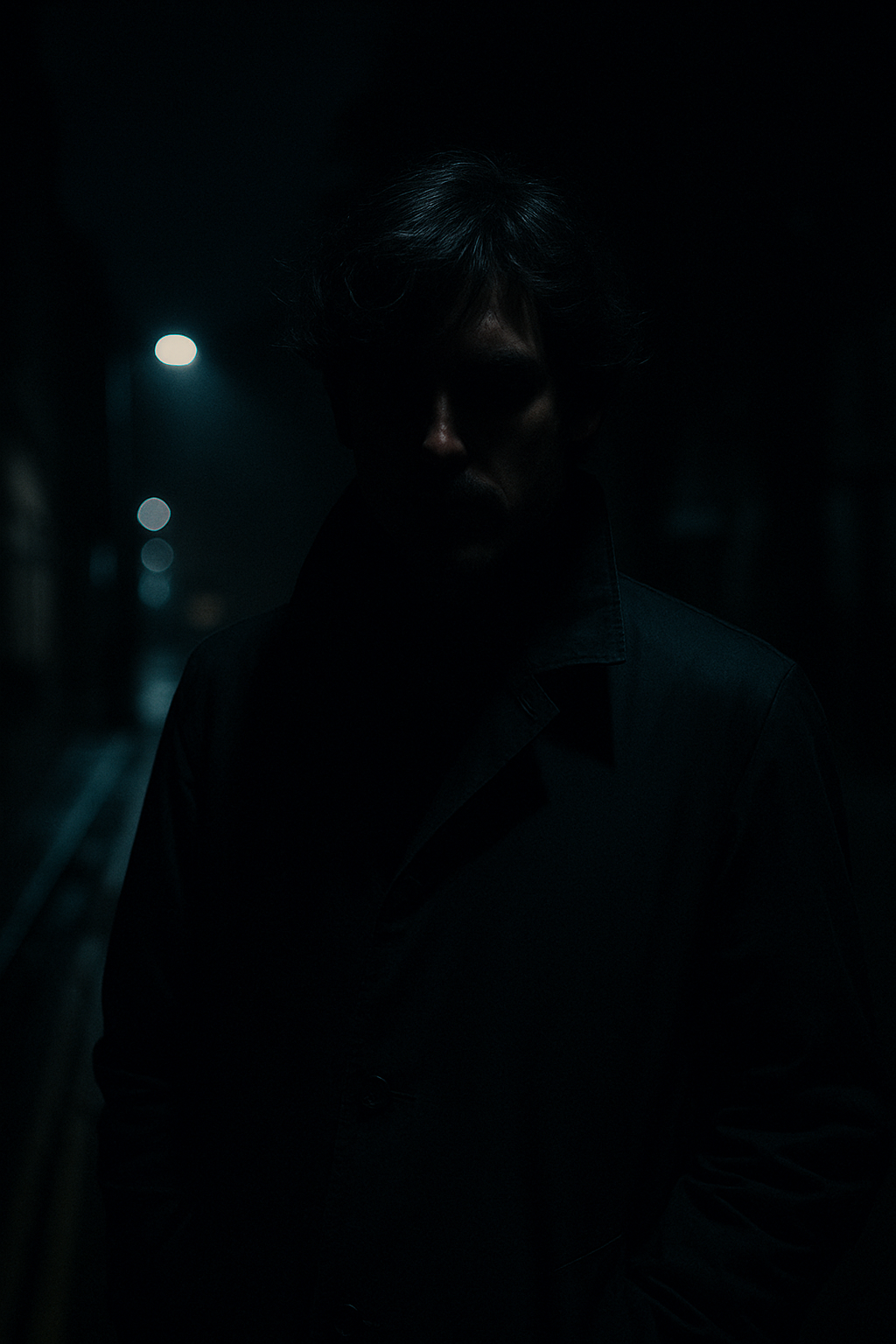
His new material sits firmly in the shoegaze constellation, although he sidesteps the genre label with mild irritation. “I don’t gaze at shoes,” he says. “I admire them, occasionally, but as an aesthetic object rather than an existential prompt.” Semantics aside, the sound is unmistakable. His latest single, Spangle Theory, opens with a cascade of guitar harmonics that shimmer like cold light on water. Underneath, a slow-motion drum loop trudges with the determination of a melancholy pilgrim. Riley’s voice arrives almost as an afterthought, a soft plume of breath forming half-thoughts about distance, yearning, and the awkwardness of being sentient.
The new work feels like a return. Not a comeback — that implies he ever left — but the renewal of a signal that had been quietly pulsing under the noise floor. “It was time,” he says. “The songs insisted.”
His home studio is tucked behind a book-lined sitting room in a north Oxford terrace. The space is dense with pedals, vintage amps, and notebooks full of lyrics that read like they were written during a particularly reflective walk along the Thames. Strands of fairy lights illuminate the guitars on the wall. “I like shimmer,” he admits. “Reality benefits from it.”
What surprises is his adoption of the Entanglion, Drogue House’s neural interface that most songwriters approach either with messianic fervour or existential dread. Riley claims neither. “It was an experiment,” he says, sounding faintly apologetic. “I wanted to see if instant vocal harmonics were actually useful, or if they would simply reveal how thin my voice is.” He smiles. “Turns out they do both, but in a charming way.”
He describes the device not as a shortcut but as an unexpected collaborator, a box that reflects his intentions back at him with unnervingly precise fidelity. “I think in intervals,” he says. “The Entanglion just helps them stack in slightly more celestial ways. A scaffolding for whimsy.”
Despite his intellectual detours, Riley’s songs remain disarmingly emotional. He writes about smallness, about the dignity of quiet, about the beauty of things that nearly vanish. He remains sceptical of attention, allergic to hype, and deflects praise with jokes that land somewhere between humility and self-defence.
Before we part, he summarises his artistic philosophy with characteristic dryness. “I’m trying to make music that sounds like a sigh that got promoted,” he says. “If people enjoy it, I’m grateful. If they don’t, I completely understand.”
Gentle Riley is back in the game, even if he would never phrase it as boldly. Oxford’s dream-pop universe just regained one of its quieter stars.